


ACIC's 50th Anniversary
Travel through time with us as we follow ACIC’s journey from a regional committee to the organization as we know it today.
2025
ACIC in 2025
For 50 years, the Atlantic Council for International Cooperation has supported a diverse range of organizations across Atlantic Canada, advocated for our region on a national level, and created opportunities for youth to become confident leaders. We have persevered through operational obstacles, global uncertainty, and unpredictable levels of support. Through it all, we have maintained our goals of public engagement, advocacy, capacity-building, and youth empowerment.
Though we have remained consistent during our time as an organization, we have also found places to grow. Justice, equity, and sustainability have always been core to our vision; we continue to learn and progress through intentionally incorporating decolonization, anti-racism, and intersectionality into our programs and operations.
Thank you to all of our members, partners, and participants – you make us the organization we are today. We’re excited to continue and expand our work to help make Atlantic Canada, our country, and our world a more just, equitable, and sustainable place.

Participants at ACIC’s 2025 Symposium in Halifax, From Aid To Action.

We engage Atlantic Canadians in issues related to international development, global solidarity and social justice. Through our public engagement work, we aim to give Atlantic Canadians the knowledge, skills, and tools necessary to become active global citizens. Our rich and vibrant coalition is united by a strong commitment to build a more just, equitable and sustainable world.
Our work over the coming five years is focused on fostering just, equitable, and sustainable communities, both locally and globally. Guided by this vision for the present and the future, our core values will guide us in our relationships, planning, programs, and operations. Our strategic directions will be achieved alongside, and in service to our Communities of Focus and those centred in our work.
2025
LIFT
Funded by GAC and run through the ICN, the LIFT program will support SMOs to scale their international development projects and strengthen their capacity to respond to the most pressing global challenges.
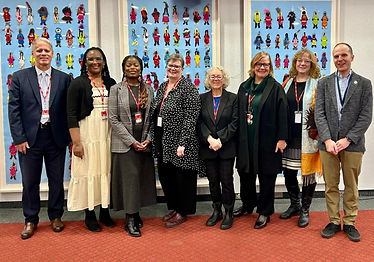

Hosted by the Manitoba Council for International Cooperation, LIFT will help organizations strengthen capacity, deepen partnerships, and scale their global development work, supporting 150+ small and medium sized organizations across the country.
Pictured here are the Executive Directors of Canada’s Councils for International Cooperation alongside Global Affairs Canada Staff.
Featured Programs from Our History
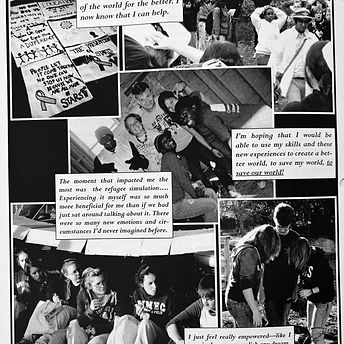
2006-Present ACIC’S Youth Conferences
The very first Move Your World Youth Conference is held in 2006. Over the years, Move Your World made way for the ACT 4 Global Change Youth Conference, and later the Global Citizenship Youth Conference, which ACIC continues to hold annually.



2025
ODA update
At the end of Justin Trudeau’s 10-year term as Prime Minister, Canadian ODA is 0.34% of GNI, still far short of the UN goal of 0.7%.

Prime Minister Justin Trudeau addresses the United Nations General Assembly Thursday, Sept. 21, 2017. (Richard Drew/Associated Press)
2024
Leo Cheverie Award
In memory of past ACIC board member Leo Cheverie, the first Leo Cheverie Significant Achievement Award is announced. The award recognizes community leaders who have made significant contributions to their local and global communities. The first award was presented at the 2025 symposium.

Leo was a longtime advocate for fariness and equity, and played a significant role in helping shape ACIC into what we are today.
The Leo Cheverie Significant Achievement Award honours individuals whose long-standing commitment to justice equity, and global solidarity has created lasting change, often behind the scenes.
Featured Programs from Our History
2023-2028 IYIP with the Marine Institute
ACIC partners with the Marine Institute of the Memorial University of Newfoundland and Labrador to deploy 190 interns to placements in 15 countries, prioritizing Indigenous, racialized, and 2SLGBTQIA+ participants.


2022
Anti-Racism Framework
After our Safer Spaces Dialogue pilot in 2021, ACIC publishes our anti-racism framework.

Pictured here are ACIC staff, board, and members participating in a Membership Anti-Racism Training in Tatamagouche, NS.
2022
COVID-19 pandemic
The World Health Organization declares the COVID-19 outbreak a pandemic. Between February 2020 and May 2023, Canada contributes $1.4 billion for humanitarian and development assistance for immediate pandemic responses. Nationally, NGOs like ACIC must halt their programming almost overnight and adapt to become fully virtual. In the international development field, issues relating to travel, reliable internet access, funding concerns, and exacerbated inequalities strongly impacts NGOs and their partners.


The COVID-19 pandemic brought uncertainty and major shifts to ACIC programs, from postponed travel to rapid digital pivots. Yet, in this time of disruption, our members and partners showed remarkable resilience and continued working towards shared goals in new was. ACIC programs were moved towards online or hybrid models, and our network adapted to engaging with communities in virtual spaces.
Pictured above are the 2022 ACIC Symposium, Through the Looking Glass, and a 2022 Storytelling for Social Change workshop.
Featured Programs from Our History
2022-Present Partnership Enhancement Fund
The Partnership Enhancement Fund provides ACIC members the opportunity to invite their international partners to Atlantic Canada. Breaking the Silence is the fund’s current recipient, and LifeSchoolHouse, Venture 2 Impact, and The Cooper Institute have all used the fund to enhance relationships with partners across the globe.


2021-2023
Our Communities, Our Voices
24 young Indigenous leaders learned how to create meaningful change through social media. The participants partook in a series of workshops teaching them how to launch social media campaigns to raise awareness of social movements in Indigenous communities and engage them in the SDGs.

“Indigenous people already make the connection of the interconnectedness of the SDGs. Its part of us, everything is energy and everything has life tot i. Everything is worthwhile.”
Kailey Simon
Our Communities, Our Voices Program Participant 2022

The 'Our Communities, Our Voices' program aimed to engage young Indigenous leaders to share stories, knowledge, and perspectives from their own Communities. Using the Sustainable Development Goals as a framework for discussion, the team of Indigenous women and two-spirit folks gained skill, knowledge, and support systems for becoming advocates in their communities.

Featured Programs from Our History
2020-Present PhotoVoices Projects
Since 2020, ACIC has partnered with multiple organizations to create 5 photovoice projects with over 100 youth both regionally and internationally. PhotoVoices allows youth to tell stories through photos while also providing a place to learn about social justice.


2019
Youth Stream
ACIC introduces the first Youth Stream to our annual symposium.


ACIC’s Youth Stream program aims to provide opportunities to Canadian youth to participate in our symposium programming, without the burden of travel, accommodation, and other costs that would create barriers for youth participation.
Youth representation is essential to ACIC’s work because young people bring fresh perspectives, lived experience, and bold ideas that strengthen how our sector approaches global solidarity. Pictured here are youth attendees at ACIC events like the ACIC symposium and Youth Gathering.
2019
Spur Change
ICN starts Spur Change, a 7-year capacity-building and knowledge-sharing initiative that provides support for Canadian Small and Medium Organization in the planning, implementation, and monitoring of development projects.



The Spur Change program is led by the Alberta Council for Global Cooperation in partnership with the other provincial and regional councils across Canada. Its activities are designed to strengthen the ability of small and medium-sized organizations to deliver sustainable, equity-driven results aligned with Canada’s Feminist International Assistance Policy and the Sustainable Development Goals; deepen the engagement of Canadians as informed and active global citizens; and support meaningful knowledge-sharing between Canadian SMOs and their partners around the world.
Through its 7 years of programming, Spur Change has hosted workshops and trainings in Atlantic Canada, covering topics like Risk Management and Data Collection. Pictured here are Spur Trainings in Halifax Nova Scotia in 2025 and 2024.
2019
Hosting ICN
ACIC begins our term as host for the Inter-Council Network.


In 2019, the Inter-Council Network (ICN) transitioned its national coordination team to Halifax, with ACIC taking on the role of hosting the program. This move brought new momentum to the East Coast and strengthened collaboration across Canada, creating fresh opportunities for shared learning, sector coordination, and collective action in global solidarity.
Above are photos of the Inter-Council Network’s Youth Delegation to AWID (Thailand) in 2024, and the Executive Directors of MCIC, ACIC, ACGC, and AQOCI alongside the Minister for International Development, Ahmed Hussen.
2019
Fund for Innovation and Transformation (FIT)
FIT is designed to support Canadian SMOs testing innovative solutions that advance gender equality in the Global South. The program seeks to foster collective learning and capacity-building through the creation of knowledge-sharing spaces and practices.

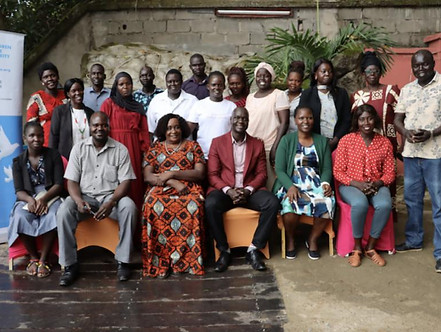
The Dallaire Institute for Children, Peace and Security from Dalhousie University tested a comprehensive prevention program to protect children from being recruited and used as soldiers, with a focus on conflict related sexual violence in Juba, Central Equatoria State, South Sudan.
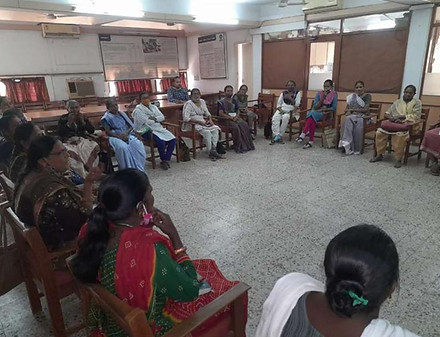
Coady International Institute tested tools with women farmers to identify capacity building needs, such as accessing new technologies, credit, infrastructure, markets, financial and business planning/management in the Nyando Valley (Kenya) and in two districts of Gujarat State in India.
Featured programs from our history
2018-2023 International Internships for Indigenous Youth
Co-implemented by ACIC and the Northern Council for Global Cooperation, the International Internships for Indigenous Youth program provided placements for 99 youth with organizations in 7 countries in the Global South. The program was adapted to provide virtual alternatives for 55 virtual interns during the COVID-19 pandemic.

2017
A “Feminist Foreign Policy”
The federal government announces its new Feminist International Assistance Policy (FIAP) promoting gender equality and the empowerment of women and girls as the most effective way to “reduce extreme poverty and build a more peaceful, inclusive and prosperous world.”

Image from Global Affairs Canada.
2016
ICN SMO Report
The ICN publishes “Small and Medium-Sized Canadian Civil Society Organizations as Development Actors”, a report that presents evidence of SMOs’ competencies and values in the international development sector. It also discusses the negative impact that CIDA’s change to an exclusive call-for-proposal funding model had on SMOs.
2016
ODA update
Canada’s net ODA is 0.26% of GNI.

The paper develops a profile of Canadian SMOs involved in development cooperation, examines the impact of changing funding modalities on SMOs from 2010 to 2016, and outlines the characteristics of SMOs as development actors. The report is available at this link.
Featured Programs from Our History
2002-Present International Youth Internship Program
2002 marked the first time ACIC received funding for the International Youth Internships Program! 4 youth participated in the first year. By the end of 2025, ACIC will have supported nearly 300 interns working in over 25 countries through our internship programs.


2015
New global agreements
The federal government announces its new Feminist International Assistance Policy (FIAP) promoting gender equality and the empowerment of women and girls as the most effective way to “reduce extreme poverty and build a more peaceful, inclusive and prosperous world.”

2015
Trudeau’s changes
Prime Minister Justin Trudeau renames DFATD to Global Affairs Canada (GAC) and states that “Canada is back.”

2014
Engage, Strengthen, Connect
ACIC establishes objectives to increase Atlantic Canadians’ awareness of key global issues and engagement in international cooperation; strengthen and build capacity for increased effectiveness; and facilitate better knowledge-sharing among ACIC members and other stakeholders.

ACIC’s 2014 Strategic Plan shaped our strategic directions by focusing on three main pillars; To increase Atlantic Canadians' awareness of key global issues and engagement in international cooperation; to strengthen and build capacity for increased effectiveness; and to facilitate better knowledge sharing among ACIC members and other stakeholders.
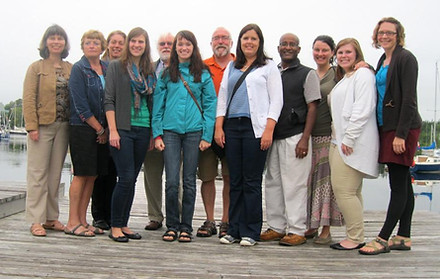
Pictured above are the ACIC Board of Directors and Staff teams in 2013 and 2015.
Featured Programs from Our History
2014-Present Members’ Public Engagement Fund
The Members’ Public Engagement Fund provides financial support to ACIC members for small public engagement projects. It emerged out of the previous Members’ Collaboration Fund, and has funded projects such as film screenings, conferences, workshops, and more.


2013
CIDA → DFATD
CIDA is amalgamated with the Department of Foreign Affairs and International Trade to create DFATD: the Department of Foreign Affairs, Trade, and Development. This development reduces traditional mechanisms for civil engagement, and NGOs “are expected to compete in calls for proposals and act as contractors to implement the government’s priorities.”

Featured Programs from Our History
2006-2011 First Voices: Connecting Aboriginal Youth in the North and South
Over 5 years, First Voices brought together 24 Indigenous youth from Atlantic Canada, Guatemala, Chile, Honduras, Botswana, and the Philippines to create confident global citizens through a variety of art forms.


2009
Shirley Case Leadership Award Founded
ACIC founds the Shirley Case Leadership Award in Global Citizenship in honour of Shirley Case, a former ACIC intern who was killed in Afghanistan while working with the International Rescue Committee. The award is presented annually to an individual or group in Atlantic Canada who has demonstrated the spirit of global citizenship and helped create a more just and sustainable world through engaging in meaningful global citizenship activities.

Burris Devanney, winner of the 2016 Shirley Case Leadership Award for Global Citizenship at ACIC’s 2016 Symposium Gala.

Shirley worked with ACIC as an intern in 2004-05, spending four months with us in Halifax before travelling to work with our partner organization, the NGO Coalition for the Environment (NGOCE) in Calabar, Nigeria for five months.

Irene Novaczek, winner of the Shirley Case Leadership Award for Global Citizenship 2014, with previous winners Jackie McVicar, Joan Campbell, and Marian White.
Stories From Across the Decades

"Text."
Bill Chislett
International Development Specialist, MI International
2006-2015
Tying New Knots
Under the Harper government, international aid is “untied” in name, but not in practice. Minister for International Cooperation Julian Fantino states that “foreign aid should benefit Canadian companies,” as demonstrated by partnerships between INGOs and Canadian mining companies operating in developing countries.

Prime Minister Stephen Harper addresses the UN summit on the Millennium Development Goals in New York on Sept. 21, 2010.
PAUL CHIASSON/THE CANADIAN PRESS
2006
Inter-Council Network
The Inter-Council Network is formed to “create a national space for regional voices, to demonstrate our leadership in public engagement and to undertake cross country initiatives and programs."

Featured Programs from Our History
2006 Both Sides of the Coin Microcredit Project
ACIC organized a research project, workshops, and speakers tour on the topic of microcredit in Atlantic Canada and overseas. We organized two sessions at the Global Microcredit Summit, including a “Listening to the Borrowers” session which marked the first time microcredit borrowers had attended the summit.


2005
New Strategic Priorities
ACIC’s new strategic plan brings with it new priorities: act as a forum for policy dialogue, create capacity-building opportunities, coordinate public engagement efforts, and strengthen our ability to function effectively.
Text

Text
Featured programs from our history
2003-2004 NGO Coalition for the Environment
ACIC worked with the NGOCE, a consortium of Canadian and Nigerian organizations working together to promote sustainability and protect the environment in Nigeria, to develop workshops on participatory monitoring and evaluation, policy development, and coalition building, as well as assisting in the creation of a communications plan.

2004
Relocation
A growing ACIC moves our office from interim host Falls Brook Centre to Halifax.

Text
Text
Featured Programs from Our History
2003 Travelling Wisely Workshops
ACIC held workshops on Culturally and Environmentally Appropriate Travel and Tourism (CEATT). ACIC members created the workshop materials for over 180 participants across the Atlantic provinces.


200
A New Vision
ACIC creates a three-year strategic plan, with objectives to engage the public on international issues; build relationships regionally, nationally, and globally; facilitate culturally and environmentally appropriate travel and tourism; represent Atlantic Canada on a national scale; and diversify our funding base. As of August 2001, ACIC already has 28 members.

Text
ACIC’s Board of Directors in 2002.
2001
Expansion and reduction
CIDA announces offices in St. John’s and Halifax, with a regional headquarters in Moncton. Nearing the end of the Chretien government, ODA has decreased to 0.22% of GNI.

ACIC coordinator Sarah Shima and the Honourable Maria Minna, Minister for International Cooperation at the announcement for CIDA’s new regional office in Moncton
2000
Reassembly
In April 2000, a meeting at the Coady Institute in Antigonish culminates with the reassembly of ACIC! The Falls Brook Centre, an established NGO, offers to host ACIC at a temporary base. An interim council is named and ACIC receives CIDA funding from a public engagement fund for a series of regional deliberations on climate change.

2000
MDGs
The United Nations announce the Millennium Development Goals, 8 goals to combat poverty, hunger, disease, illiteracy, environmental degradation, and discrimination against women.

The Millennium Development Goals set a shared global agenda for 2000 to 2015, mobilizing governments, civil society, and international partners around concrete targets to improve human well-being. While progress varied across regions, the MDGs helped reduce extreme poverty, expand access to education, and improve health outcomes worldwide, ultimately paving the way for the broader and more inclusive Sustainable Development Goals adopted in 2015.
Climate Change Public Deliberation Project
2000-2002 Climate Change Public Deliberation Project
ACIC started our return with a series of CIDA-funded public deliberations on climate change in all four of the Atlantic provinces. Participants learned about climate change and policy options regionally, nationally, and internationally.



1995
Dormancy
Due to CIDA cuts, ACIC’s office in Moncton is forced to close. A new board is elected, but without funding, the organization goes dormant.
1995
A cutting blow
CIDA’s funding is cut again, ending their delegated funds “as well as the majority of the domestic public education programs in Canada's international development sector.”
1994
Becoming the Atlantic Council for International Cooperation
In March 1994, ACIC is legally incorporated under New Brunswick legislation! With an office in Moncton, an 8-member board, and a paid coordinator, ACIC focuses on building membership, networking, and training workshops for dealing with organizational change.

1993
ARC Expanding
A feasibility study finds that there is an opportunity, a need, and a desire for a Regional Council in the Atlantic provinces.
1993
Further cuts and tied aid
Under newly-elected Prime Minister Jean Chrétien, major cuts hit the international development sector. CIDA’s Public Participation Program is abolished. In 1995, funding to the sub-Saharan Africa program is slashed by 20.5% over three years.
Canada adopts a “tied aid” approach — international aid that requires the recipient country to procure goods or services from the donor.

Text
1992
NAC abolished
The 1992 budget eliminates the National Action Committee on Development Education.

Text
1991
IDW
The first International Development Week is celebrated across Canada.

International Development Week (IDW) was launched in Canada in 1991 to highlight global cooperation and celebrate the contributions of Canadians working toward poverty reduction, human rights, and sustainable development. Since its inception, IDW has served as a national moment to reflect on our shared responsibilities, amplify global solidarity efforts, and inspire Canadians to take action for a more just and equitable world.
Featured programs from our history
1970s to early 1990s Unionization and union support
Early ARC members were involved in unemployment issues and unionization drives with groups like the United Rubber Workers and Canadian Auto Workers. Into the 1990s, the ARC supported projects with Maritimes Fishermen’s Union, the National Farmer’s Union, and more.
1989
A changing world
The 1989 Canadian federal budget cuts CIDA funding by 13%. In the wake of the Cold War, donor countries like Canada adopt neoliberal approaches to development aid.

Text
mid-1980s
CIDA’s reach
In the mid-1980s, CIDA supports over 2400 projects led by 200 organizations, including CCIC and the ARC.
Featured Programs from Our History
1977–1979 People’s Food Commission
In a time when food prices soared and production declined, the ARC joined this nationwide initiative bringing together farmers, consumers, and food processing workers in a comprehensive inquiry into the food system. Their final report, “The Land of Milk and Money,” became the base for the People’s Food Policy by Food Secure Canada.


1980s
Period of Outreach
Before the professionalization of NGO work, development activism and education expands during the 1980s. ARC projects during this time focused on the local and connecting it to the global scale. Prevailing issues concerned regional agriculture, mining, fishery, and union issues. The ARC’s only source of income was an annual grant from CCIC, typically $20,000 (approximately $52,000 in today’s currency).
Featured programs from our history
1976 St. John’s Mummers Troupe
Named after a quote from a Newfoundland fisherman to an international development presenter, “What’s That Got to Do with the Price of Fish?” was a touring theatrical production about the struggle of local fishermen under federal fisheries policy.
1975-1976
Canadian international aid peaks at 0.53% GNI
The recommended target from the United Nations is 0.7%, established in 1970.
Featured programs from our history
1970s & 1980s Supporting liberation through performance
During liberation wars in southern Africa and Central America, the ARC organized a series of events in the region to create international understanding. These events included political speakers, musicians, playwrights, and poets.
1975
CCIC establishes the Atlantic Regional Committee
CCIC forms their Atlantic Regional Committee (ARC), the original ACIC, from a group of community animators across the region who saw regional social change organizations’ need for support. Staffing was contractual and there was no office, but the representative members were able to use a Small Projects Fund as grants for regional projects.
Featured programs from our history
1970s Mulgrave Road Theatre Co-op
Mulgrave Road Theatre is a progressive theatre project based out of Guysborough, Nova Scotia. The ARC also supported other theatre and arts projects, such as a travelling show based on the Baie Verte mine’s Steelworkers Union in Newfoundland.

1968
Canadian Council for International Cooperation (CCIC) is founded
CCIC was created to "foster good practice among civil society organizations working to reduce global poverty.”

1968
Canadian International Development Agency (CIDA) is founded
CIDA funded international development assistance projects, both directly and through NGOs like CCIC.
